Blog / Court decisions
Can a City Change the 3 Day Notice? What the San Francisco and LA County Cases Say
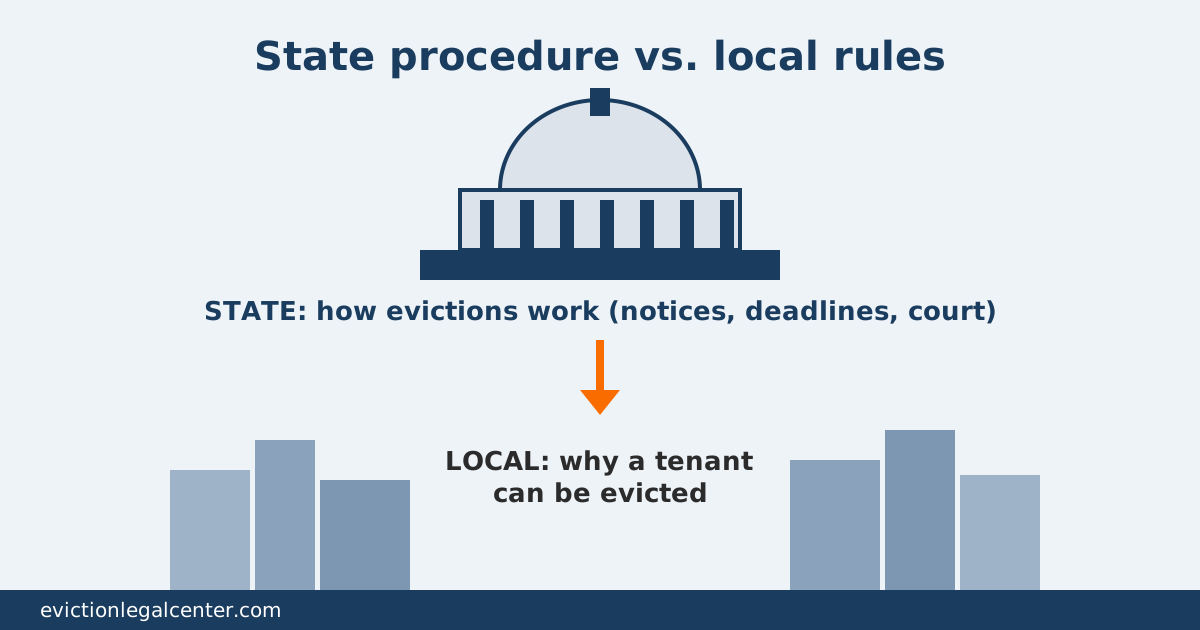
- Cities and counties may limit why a landlord can evict, but they generally cannot change the state's eviction procedure, including the 3 day notice.
- In September 2024 the Court of Appeal invalidated San Francisco's requirement of a 10 day warning notice before certain 3 day notices (No. A166228).
- In January 2024 a Los Angeles Superior Court judge set aside a County rule requiring a 30 day notice to pay or quit for certain pandemic era rent.
- By contrast, the City of Los Angeles minimum rent threshold was upheld in 2026 as a substantive limit.
The basic rule
California's unlawful detainer statutes, starting at Code of Civil Procedure section 1159, set the procedure for evictions statewide, including the 3 day notice to pay rent or quit in section 1161. Under a line of cases going back to the California Supreme Court's 1976 decision in Birkenfeld v. City of Berkeley, local governments may regulate the substantive grounds for eviction, for example by requiring just cause, but may not rewrite the summary court procedure the Legislature created.
San Francisco's 10 day warning notice
In 2022 San Francisco adopted Ordinance No. 18-22, which required landlords pursuing many fault based evictions to first give tenants a 10 day warning and opportunity to cure before serving the state notice. The San Francisco Apartment Association and Small Property Owners of San Francisco challenged it. On September 11, 2024, the Court of Appeal held that the ordinance effectively changed the notice period required by state law and was preempted, and barred the City from enforcing it (San Francisco Apartment Association v. City and County of San Francisco, No. A166228).
Los Angeles County's 30 day notice
In January 2023, Los Angeles County adopted a resolution requiring landlords to give a 30 day notice to pay or quit before evicting for rent that had been deferred under the County's pandemic moratorium. The California Apartment Association filed a petition for writ of mandate. In January 2024, Judge Mitchell Beckloff of the Los Angeles Superior Court ruled that the 30 day requirement conflicted with the 3 day period in section 1161(2) and ordered the County to follow the state notice period. As a trial court ruling, it is not binding precedent, but it reflects the same principle.
Where the line is: dollars, not days
In April 2026 the Court of Appeal upheld the City of Los Angeles rule that a tenant must owe more than one month of fair market rent before a nonpayment eviction (read our summary). The court distinguished the San Francisco case: the Los Angeles rule does not add a notice, a cure period or extra days. It simply sets an amount owed before nonpayment becomes a ground for eviction, which the court treated as a substantive limit. The County's newer two month threshold is built the same way.
What landlords should take from this
- Local just cause, rent control and minimum arrears rules are generally enforceable. Follow them.
- Extra local notice periods or pre notices may be open to challenge, but do not ignore one without legal advice; courts decide these questions case by case, and the law in your city may differ.
- Whatever the local rules, the state requirements for the notice itself still apply, including those from Eshagian v. Cepeda.
This article is general information about California law as of its date, not legal advice for your situation. Laws and local ordinances change, and court decisions can be reviewed or reversed. Reading it does not create an attorney client relationship.