Blog / Landlord guides
Tenant Stopped Paying Rent? A California Landlord Guide
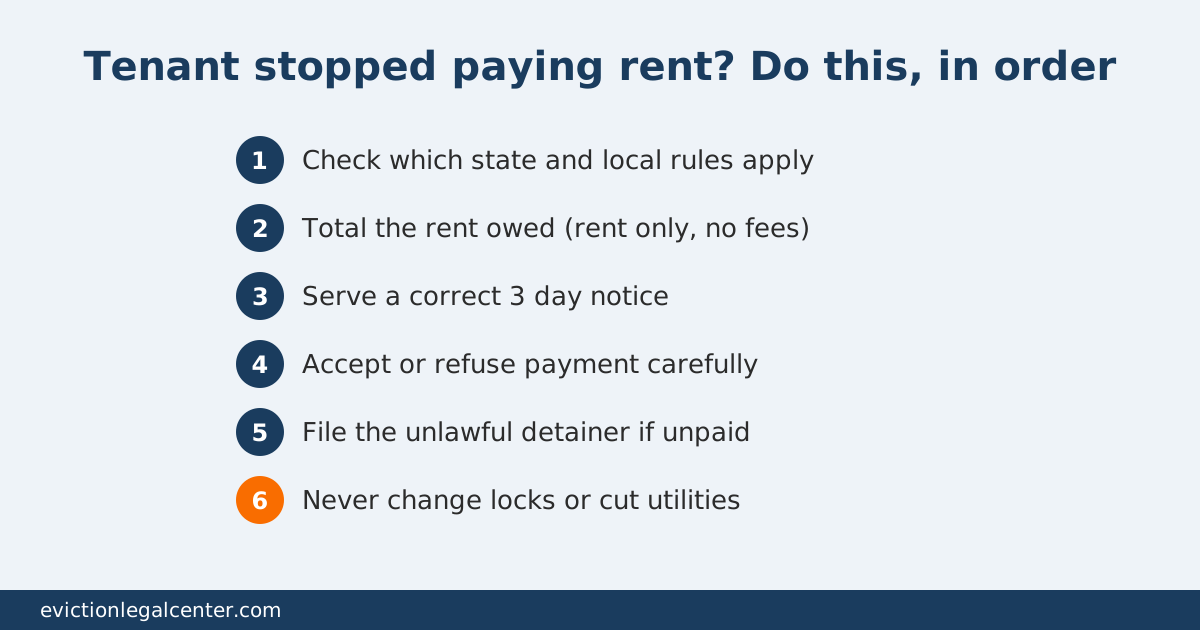
- Do not change the locks, remove belongings or shut off utilities. Self help evictions are illegal in California and carry penalties.
- Check first whether a city or county rule limits nonpayment evictions (for example Los Angeles).
- The 3 day notice may demand rent only, and since 2025 it must include specific dates and payment details.
- Partial payments after the notice can derail the case. Get advice before accepting money.
A tenant has stopped paying rent. You still owe the mortgage, taxes and insurance, and every week matters. Here is what a California landlord should do, in order, to get paid or get the unit back as quickly as the law allows.
1. Talk to the tenant, and put it in writing
Sometimes nonpayment is temporary: a lost job, a medical emergency, a delayed paycheck. A short conversation can lead to a payment plan that costs less than an eviction. If you agree to a plan, write it down, signed by both of you. Note that tenants whose Social Security benefits are delayed now have a specific defense in nonpayment cases (AB 246), so ask about the reason.
2. Check which rules apply to your property
State law sets the basic procedure, but local rules can change what you are allowed to do. In the City of Los Angeles you cannot evict for nonpayment unless the tenant owes more than one month of HUD fair market rent for the unit size. In unincorporated Los Angeles County the threshold is more than two months. Santa Ana, Pasadena, Santa Monica and other cities have their own requirements, including registration and filing rules. See our city pages for local details.
3. Calculate exactly what is owed
The 3 day notice may include only unpaid rent. Do not include late fees, utilities, repairs, parking or other charges, and do not round up. An overstated amount can make the notice invalid. Rent that is more than 12 months old should not be included in a 3 day notice; it can be pursued separately.
4. Serve a correct 3 day notice to pay rent or quit
After the Eshagian v. Cepeda decision, the notice should state the dates the 3 day period begins and ends, explain that weekends and court holidays are excluded, give a real name, address and method for payment (not the tenant's own unit), and state that you will retake possession if rent is not paid. It must be served by personal delivery, substituted service with mailing, or posting and mailing when the other methods are not possible.
5. Handle payments carefully
If the tenant pays the full amount demanded within the notice period, the tenancy continues. Accepting partial payment after the notice, or rent for a later period, can waive the notice in many situations. Talk to us before you deposit any payment once a notice has been served.
6. File the unlawful detainer if the rent is not paid
When the notice expires without full payment, the next step is an unlawful detainer lawsuit in the Superior Court. The tenant has 10 court days to respond. If there is no response we request a default judgment; if the tenant answers, the case goes to trial. After judgment the sheriff enforces the lockout. Read how long an eviction takes.
7. What not to do
- Do not change the locks, remove doors or windows, take the tenant's belongings, or cut off water, power or gas (Civil Code 789.3).
- Do not threaten to report immigration status or harass the tenant; both are prohibited.
- Do not refuse repairs to pressure the tenant; it creates habitability and retaliation defenses.
- Do not serve a notice that demands fees or the wrong amount.
8. Recovering the money
The eviction judgment can include unpaid rent and holdover damages. Collection can be pursued afterward through wage garnishment or a bank levy if the former tenant has assets, and the security deposit can be applied to unpaid rent with a proper itemized statement.
Need help now? Contact us or call (714) 782-7275 before you serve the notice.
This article is general information about California law as of its date, not legal advice for your situation. Laws and local ordinances change, and court decisions can be reviewed or reversed. Reading it does not create an attorney client relationship.