Blog / Landlord guides
How Long Does an Eviction Take in California? (2026)
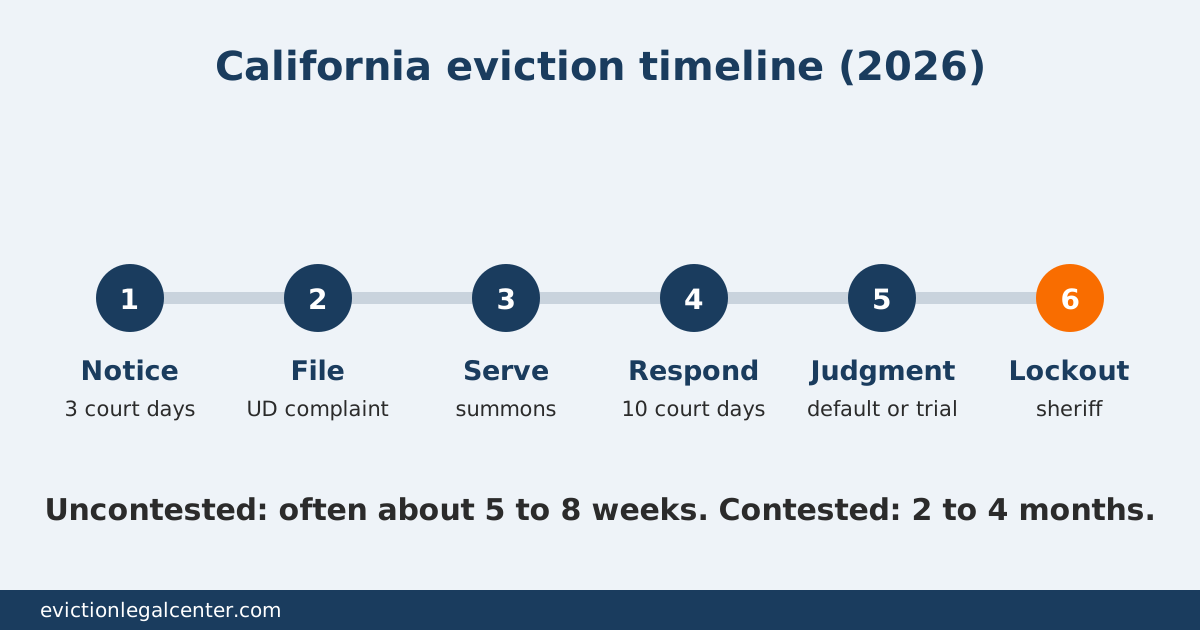
- An uncontested residential eviction in Orange County or Los Angeles County commonly takes about 5 to 8 weeks from the notice to the lockout.
- If the tenant files an answer and asks for a trial, plan on 2 to 4 months.
- Since 2025 tenants have 10 court days to respond to the lawsuit, which added about a week to most cases.
- The biggest avoidable delay is a defective notice, which forces you to start over.
"How long will this take?" is the first question almost every landlord asks. The honest answer depends on the notice you need, how the tenant is served, whether the tenant fights the case, and how busy the court and the sheriff are. Here is the realistic timeline for a California eviction in 2026, step by step.
Step 1: The notice (3 days to 90 days)
Every eviction starts with a written notice. For unpaid rent it is a 3 day notice to pay rent or quit, and the 3 days do not count Saturdays, Sundays or court holidays, so it usually runs about five calendar days. A curable lease violation uses a 3 day notice to perform or quit. Ending a tenancy without fault takes 30, 60 or 90 days depending on the length of the tenancy and the type of housing, and the reason must be allowed by the Tenant Protection Act or any local ordinance.
Step 2: Filing and service (about 1 to 2 weeks)
Once the notice expires, the unlawful detainer complaint is filed with the Superior Court. A registered process server then serves the summons and complaint. Personal service is fastest. If the tenant avoids service, the server must make diligent attempts before using substituted service or posting, and starting in 2027 the documentation rules for this step become stricter.
Step 3: The tenant's response (10 court days)
Under AB 2347, the tenant now has 10 court days after personal service to file a response, roughly two calendar weeks. More time is added for substituted service or posting.
Step 4A: No response, default judgment (about 1 to 2 weeks)
If the tenant does not respond, we request a default and a judgment for possession. Most landlord cases end this way, and this is where a clean rent ledger and an accurate notice pay off.
Step 4B: The tenant answers, trial (about 3 to 8 weeks)
If the tenant files an answer, we request a trial. California law gives eviction cases priority, and trial is generally set within about 20 days of the request, although busy courthouses can take longer. Many cases settle at or before trial with a move out agreement, which can be faster and cheaper than going to verdict.
Step 5: Writ and sheriff lockout (about 2 to 4 weeks)
After judgment, the court issues a writ of possession and we deliver it to the sheriff. The sheriff posts a notice giving the occupants 5 days to leave, then returns to put you back in possession. Scheduling depends on the sheriff's workload in your area.
What makes an eviction take longer
- A defective notice. Wrong amount, late fees included, missing dates or payment details. The case is dismissed and you start over.
- Local rules. In the City of Los Angeles the tenant must owe more than one month of fair market rent; in unincorporated Los Angeles County, more than two months. Santa Ana, Pasadena and other cities add their own requirements.
- Hard to serve tenants and challenges to service.
- Defenses and motions, such as habitability claims or a demurrer to the complaint.
- Bankruptcy. A tenant's bankruptcy filing can pause the case until the landlord obtains relief from the bankruptcy court.
How to keep your eviction on the fast track
- Call an eviction attorney before you serve the notice, not after.
- Keep a dated ledger of every charge and payment.
- Do not accept partial rent after serving a notice without advice; it can waive the notice.
- Use an experienced process server.
- Consider a cash for keys agreement when a quick, certain move out date is worth more than a judgment.
See also our step by step eviction process guide and the cities we serve.
This article is general information about California law as of its date, not legal advice for your situation. Laws and local ordinances change, and court decisions can be reviewed or reversed. Reading it does not create an attorney client relationship.