Blog / Landlord guides
Commercial Evictions in California: A Landlord Guide
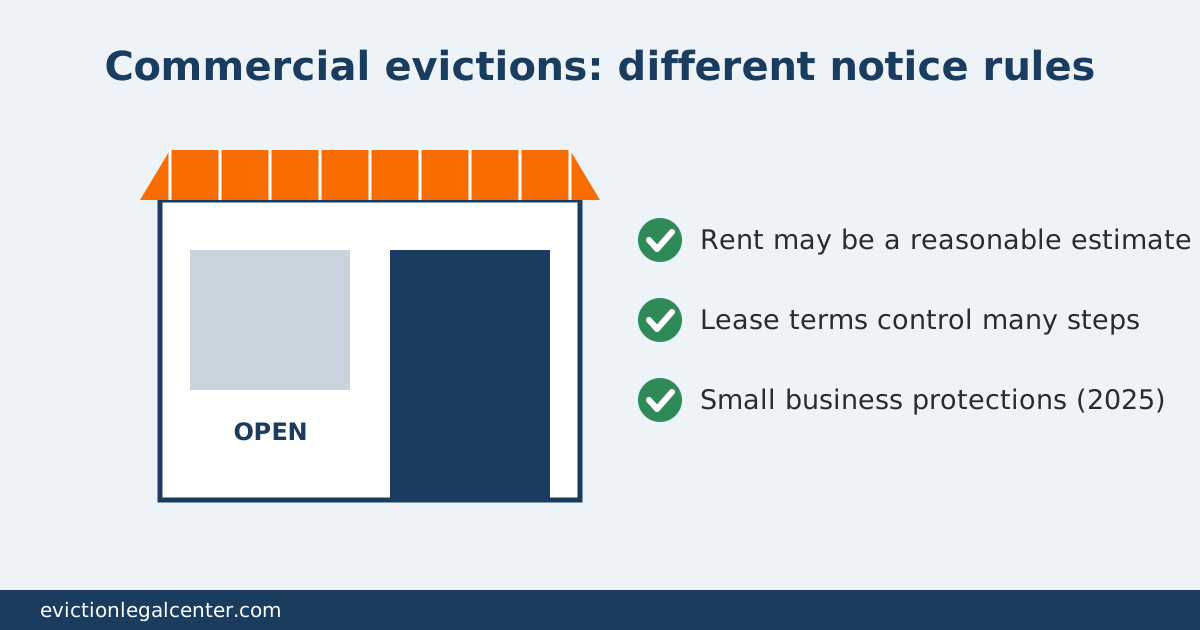
- Commercial evictions use the same unlawful detainer process as residential cases, but many residential protections do not apply.
- A commercial 3 day notice may state a reasonable estimate of the rent owed if the notice says it is an estimate (CCP 1161.1).
- The lease controls much more: notice provisions, cure periods, guarantors and fees.
- Since 2025, small businesses and nonprofits that qualify have added protections under SB 1103.
When a retail, office or industrial tenant stops paying, the stakes are often higher than in a residential case: larger rent, build out costs, guarantors and the cost of an empty storefront. California's unlawful detainer procedure applies, but the rules differ in important ways.
The 3 day notice in a commercial case
Code of Civil Procedure 1161.1 lets a commercial landlord state an estimated amount of rent owed, as long as the notice clearly says the amount is an estimate and the estimate is reasonable. Amounts other than rent, such as common area charges, may be recoverable depending on how the lease defines rent. Always read the lease's notice clause: many leases require copies to a guarantor or an attorney, or a specific delivery method, and a notice that ignores the lease can be challenged.
Lease terms matter more
- Cure periods for non-monetary defaults, which may be longer than 3 days.
- Waiver clauses that address whether accepting partial rent waives the default.
- Attorney fee clauses that let the winning party recover fees.
- Guarantors, who may be pursued separately for unpaid rent.
- Abandoned property rules for furniture, fixtures and equipment left behind.
Small business protections (SB 1103)
Beginning in 2025, "qualified commercial tenants" (generally microenterprises, small restaurants and small nonprofits that give the landlord the required written notice of their status) have added protections, including longer notice periods for rent increases and for ending month to month tenancies, and limits on passing through building operating costs. Check whether your tenant has given that notice before you act.
Residential rules that usually do not apply
Commercial tenants are not covered by the Tenant Protection Act's just cause and rent cap rules, and most local rent control ordinances do not apply to commercial space. Mixed use buildings and live work units can be harder to classify, so get advice when part of the space is used as a residence.
After possession
After the lockout, the landlord can relet the space and pursue unpaid rent and damages under the lease and Civil Code 1951.2, subject to the duty to mitigate. Acting quickly limits the loss.
See our commercial eviction services or request a free consultation.
This article is general information about California law as of its date, not legal advice for your situation. Laws and local ordinances change, and court decisions can be reviewed or reversed. Reading it does not create an attorney client relationship.