Blog / Landlord guides
Rent Ledger Records That Hold Up in a California Eviction
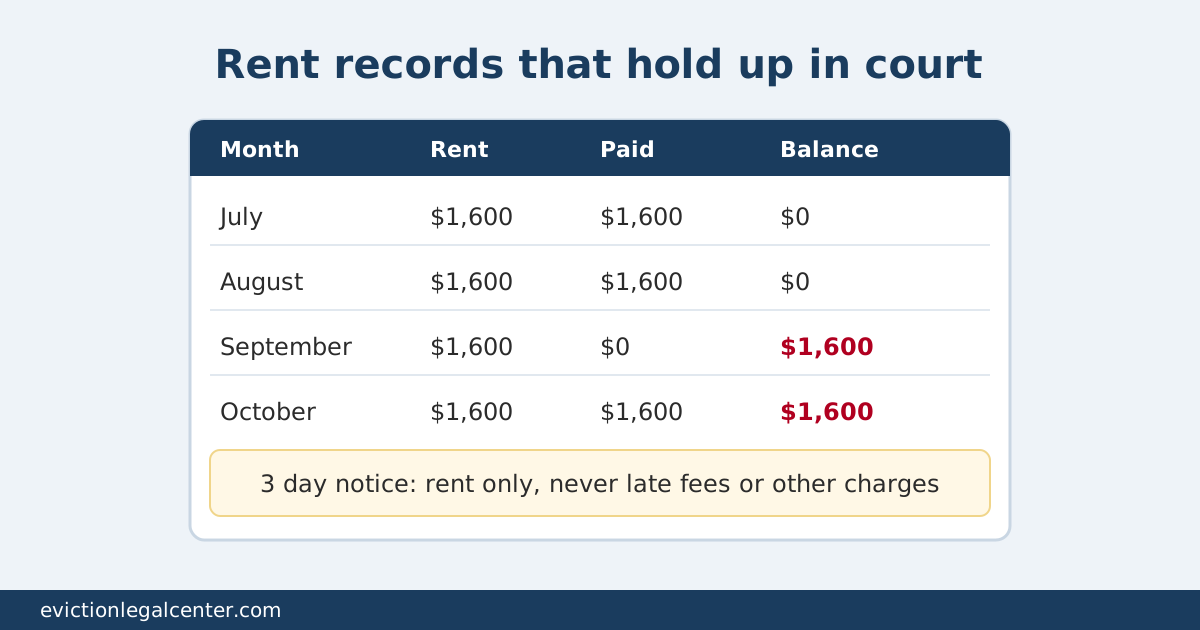
- In an eviction for unpaid rent, the landlord must prove what was owed. A clear rent ledger is the most important piece of evidence.
- A 3 day notice to pay rent or quit may demand only rent, not late fees, utilities or other charges, and must not overstate the amount.
- Late fees are enforceable only if they are reasonable and written in the lease.
- Record every charge and payment the day it happens, and give receipts.
Many eviction cases are won or lost on the numbers. If the tenant says they paid, or that the notice asked for the wrong amount, the judge will look at the landlord's records. A handwritten list with gaps, cross outs and missing months invites doubt. A clean ledger that matches the lease, the notice and the bank deposits usually ends the argument.
What a good rent ledger shows
- Every charge, by date: monthly rent on the due date, and any other charges allowed by the lease, listed separately.
- Every payment, by date: the amount, the method (check number, Zelle, money order) and who paid.
- A running balance after each entry, so anyone can see what was owed at any moment.
- Rent separated from other charges. This matters for the 3 day notice, as explained below.
- The lease terms it relies on: the start date, rent amount, due date and any late fee.
The 3 day notice must match the ledger
A 3 day notice to pay rent or quit under Code of Civil Procedure section 1161(2) may demand only the rent that is actually due. Late fees, utility charges, repair costs and other amounts do not belong in the notice. A notice that overstates the rent can be found defective, and the landlord may have to serve a new notice and refile. The three days also exclude Saturdays, Sundays and court holidays, and the notice must state the required details, including to whom, where and how rent may be paid.
Before you serve a notice, print the ledger and check it month by month. Use only the rent portion of the balance in the notice, and keep a copy of the ledger with the notice and the proof of service. Some cities, including Los Angeles, also require that the tenant owe more than a minimum amount before an eviction for unpaid rent can begin.
Late fees: keep them reasonable and written
California courts enforce a late fee only if it is a reasonable estimate of the landlord's actual costs caused by late payment (Civil Code section 1671). A fee that is really a penalty may not be collected. Put the amount and the grace period in the written lease, charge it the same way every month, and list it on its own line in the ledger.
Payments and receipts
- Give a receipt for cash payments, and for any payment when the tenant asks.
- Record partial payments the day you receive them. Accepting a partial payment after serving a notice can affect the notice, so talk with an attorney first.
- Keep deposit slips or bank records that match each entry.
- Never change an old entry without a note. If you made a mistake, add a correcting entry with the date and reason.
Common record keeping mistakes
- Lease start date entered wrong, so months of rent are missing and the balance looks like a credit.
- Late fees and utilities mixed into the rent balance.
- Rent increases that were never properly noticed, or not reflected on the correct date.
- Payments from a roommate or a rental assistance program not recorded.
- No record at all for months when nothing was paid. The ledger should still show the rent charge.
A free tool that does this for you
Our free property management software keeps a ledger for every lease, charges rent and late fees automatically if you choose, separates rent from other charges, warns you about missing months or a wrong start date, and prints a month by month statement you can send to the tenant or bring to court. Read more in our overview of the software.
This article is general information about California law, not legal advice for your situation, and reading it or using our software does not create an attorney client relationship.
Related: What your 3 day notice must say | Tenant stopped paying rent? | Free case review
This article is general information about California law as of its date, not legal advice for your situation. Laws and local ordinances change, and court decisions can be reviewed or reversed. Reading it does not create an attorney client relationship.